
EPA vs DHA: a plain-spoken guide to omega-3 fish oil
By Plum Supplements · 8 min read
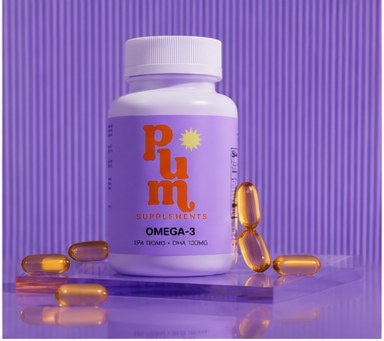
EPA and DHA are the two main omega-3 fatty acids in fish oil. EPA (eicosapentaenoic acid) is most associated with heart and overall cardiovascular support, while DHA (docosahexaenoic acid) is a major structural fat in the brain and eyes. Most fish oils contain both, and the label should list each amount separately.
What are omega-3 fatty acids?
Omega-3s are a family of polyunsaturated fats your body needs but cannot make in meaningful amounts, so they have to come from food or supplements. The three most discussed are ALA, found in plants like flax and walnuts, and EPA and DHA, found mainly in fatty fish and algae. The body converts only a small amount of ALA into EPA and DHA, which is why fish oil focuses on those two directly.
What is the difference between EPA and DHA?
| EPA | DHA | |
|---|---|---|
| Full name | Eicosapentaenoic acid | Docosahexaenoic acid |
| Most associated with | Heart and cardiovascular support | Brain and eye structure and function |
| Where it concentrates | Circulates in blood and cell membranes | Highly concentrated in brain and retina |
| Common sources | Fatty fish, fish oil, algae oil | Fatty fish, fish oil, algae oil |
These roles overlap; both fatty acids are found throughout the body and work together. That is why most products provide a combination rather than one alone. Dietary guidance for healthy adults commonly points to around 250 to 500 mg of combined EPA and DHA per day, which is roughly what two servings of fatty fish a week provide.
Triglyceride vs ethyl ester: what is the difference?
In fish, omega-3s naturally occur as triglycerides, fat molecules with three fatty acids attached to a glycerol backbone. To concentrate EPA and DHA, many manufacturers convert fish oil into ethyl esters, which are easier to purify and concentrate. Some then convert them back into triglycerides, called re-esterified triglycerides.
| Form | What it is | Commonly noted |
|---|---|---|
| Natural triglyceride (TG) | The form found in fish | Familiar to the body; lower concentration |
| Ethyl ester (EE) | Concentrated, processed form | Allows higher EPA and DHA per softgel; absorption improves when taken with a meal |
| Re-esterified triglyceride (rTG) | Concentrated, then converted back to TG | High concentration in triglyceride form; typically costs more |
Some research suggests triglyceride forms may be absorbed somewhat better, particularly when taken without food, while taking any fish oil with a meal that contains fat improves absorption. If a label does not state the form, it is reasonable to ask the brand.
How do you know fish oil is fresh?
Omega-3s are delicate fats that react with oxygen over time, a process called oxidation. Oxidized oil can smell and taste strongly fishy. Responsible manufacturers measure oxidation using standardized markers, and industry groups publish limits for them.
- Peroxide value (PV) measures early oxidation.
- Anisidine value (AV) measures later-stage oxidation.
- TOTOX combines the two into a single overall freshness number.
- Antioxidants like mixed tocopherols (vitamin E) are often added to slow oxidation.
Simple freshness checks at home
- Smell the bottle when you open it. A mild ocean smell is normal; a sharp, rancid smell is not.
- Store fish oil away from heat and light, with the lid tightly closed.
- Use it before the expiration date.
- If you notice frequent fishy burps, try taking it with your largest meal.
What to check on a fish oil label
- Total fish oil per serving, and the EPA and DHA amounts listed separately.
- The serving size: is that amount in one softgel or several?
- Other ingredients, including the softgel shell and any antioxidants.
- Allergen warnings for fish.
- Third-party testing for purity and freshness.
How Plum Omega-3 is labeled
Our Omega-3 provides 1,000 mg of fish oil concentrate per softgel, with 180 mg EPA and 120 mg DHA listed separately on the label. Other ingredients are gelatin, glycerin, purified water, and mixed tocopherols. The suggested use is 1 softgel daily with a meal. It contains fish; do not use it if you are allergic to fish.
If you take blood thinners or have a bleeding disorder or planned surgery, talk to your physician before taking fish oil.
Key takeaways
- EPA is most associated with heart support; DHA with brain and eye structure.
- Most fish oils provide both; check that each amount is listed.
- Triglyceride and ethyl ester are two common forms; take either with a meal.
- Freshness is measured by oxidation markers like TOTOX.
- Store fish oil away from heat and light.
Frequently asked questions
Is EPA or DHA more important?
Neither is more important overall; they have overlapping roles. EPA is most associated with heart and cardiovascular support, while DHA is a key structural fat in the brain and eyes. Most fish oil supplements provide both, and dietary guidance usually refers to their combined amount.
How much EPA and DHA should I take daily?
Dietary guidance for healthy adults commonly points to about 250 to 500 mg of combined EPA and DHA per day, roughly what two servings of fatty fish a week provide. Plum Omega-3 provides 300 mg combined per softgel. Ask your healthcare professional about higher amounts.
Is triglyceride fish oil better than ethyl ester?
Some research suggests triglyceride forms may be absorbed somewhat better, especially without food. Ethyl esters allow higher concentrations and absorb better when taken with a meal containing fat. Both are widely used. Taking any fish oil with a meal is a simple way to support absorption.
How can I tell if fish oil is rancid?
Fresh fish oil has a mild ocean smell. A sharp, sour, or strongly fishy smell suggests oxidation. Manufacturers measure freshness using peroxide value, anisidine value, and TOTOX. Store fish oil away from heat and light, keep the lid closed, and use it before the expiration date.
When is the best time to take fish oil?
Take fish oil with a meal, ideally one that contains some fat, which supports absorption and can reduce fishy aftertaste. Morning or evening both work. Plum Omega-3 suggests 1 softgel daily with a meal. Consistent daily use matters more than the time of day.
These statements have not been evaluated by the Food and Drug Administration. This product is not intended to diagnose, treat, cure, or prevent any disease.